
The short answer is that both affects and effects are correct, but they have different meanings and are used in different situations. Most people confuse them because the words look and sound similar.
In most everyday writing, affects is much more common than effects. Knowing the difference will help you write more clearly and avoid common grammar mistakes.
In this guide, you’ll learn what each word means, when to use it, simple examples, easy memory tricks, and common mistakes to avoid.
Quick Answer
Affects is usually the verb form of affect, meaning to influence or change something.
Effects is the plural noun form of effect, meaning results or outcomes.
Examples:
- The weather affects my mood.
- The medicine has positive effects.
Affects vs Effects: Main Difference
| Word | Meaning | Correct? | Best Used For | Example |
| Affects | Influences or changes something | ✅ Yes | Actions (verb) | Loud noise affects my concentration. |
| Effects | Results or outcomes | ✅ Yes | Things (plural noun) | The effects of the storm lasted for days. |
What Does Affects Mean?
Affects is the third-person singular form of the verb affect. It means to influence, change, or have an impact on someone or something.
Examples
- Stress affects your health.
- Rain affects road conditions.
- Lack of sleep affects memory.
- The new law affects many businesses.
- Exercise affects your energy level.
What Does Effects Mean?
Effects is the plural form of the noun effect. It means results, consequences, or changes caused by something.
Examples
- The effects of pollution are serious.
- We studied the effects of climate change.
- The medicine had no side effects.
- The long-term effects are still unknown.
- The special effects in the movie looked amazing.
People often confuse effects with affects because both words are closely related and have similar pronunciation.
How to Use Affects or Effects
Use affects when you are talking about something that changes or influences another thing.
Correct:
- The heat affects the plants.
- Noise affects my focus.
Use effects when you mean results or consequences.
Correct:
- The effects were immediate.
- We discussed the effects of the decision.
Avoid These Mistakes
Incorrect:
- The weather effects my mood.
Correct:
- The weather affects my mood.
Incorrect:
- The affects of the medicine were mild.
Correct:
- The effects of the medicine were mild.
Where to Use Affects or Effects
You can use these words in many types of communication.
School Writing
- Use affects for influence.
- Use effects for results.
Formal Writing
Both words are common in reports, essays, and research papers.
Emails
Use whichever matches your meaning.
Example:
- The delay affects our schedule.
- We are reviewing the effects of the delay.
Everyday Conversation
People often say:
- It affects me.
- What were the effects?
Messages
Both words are appropriate when used correctly.
Professional Communication
These words appear frequently in business, healthcare, education, and science.
Regional Usage
There is no American vs British spelling difference for affects and effects.
The same forms are used in:
- American English
- British English
- Canadian English
- Australian English
- Indian English
- Pakistani English
- New Zealand English
Why People Get Confused
There are several reasons why people mix up these words:
- They look almost the same.
- They sound very similar.
- Both relate to change or impact.
- One is usually a verb, while the other is usually a noun.
- They are often used in similar topics such as health, education, business, and science.
Common Mistakes to Avoid
Wrong:
The medicine affects were mild.
Correct:
The medicine effects were mild.
Explanation: You need the plural noun effects because you are talking about results.
Wrong:
Stress effects your sleep.
Correct:
Stress affects your sleep.
Explanation: Affects is the verb meaning “influences.”
Wrong:
The side affects include headaches.
Correct:
The side effects include headaches.
Explanation: “Side effects” is the correct phrase.
Wrong:
The decision had many affects.
Correct:
The decision had many effects.
Explanation: Effects means results.
Real-Life Examples
Meeting
The budget cut affects every department.
School
Too much screen time affects learning.
Travel
The storm affects flight schedules.
Work
We are studying the effects of the new policy.
Message
Your feedback affects our future updates.
Conversation
The effects of regular exercise are easy to notice.
Order or Booking
The holiday season affects delivery times.
Social Situation
Lack of communication affects friendships.
Easy Trick to Remember
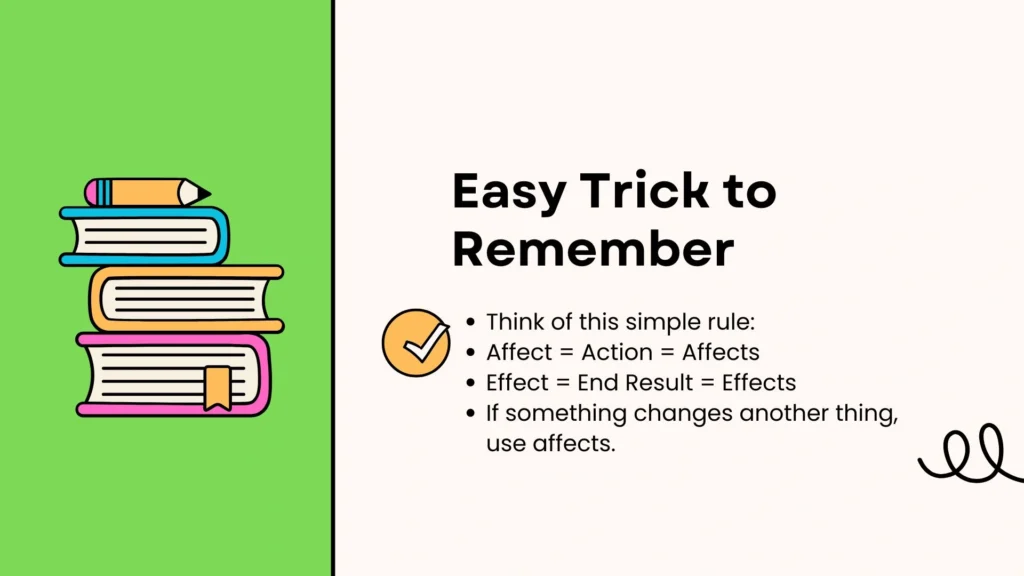
Think of this simple rule:
- Affect = Action = Affects
- Effect = End Result = Effects
If something changes another thing, use affects.
If you are talking about the result, use effects.
Mini Quiz
1. The weather ______ my plans.
Answer: affects
2. The medicine has several side ______.
Answer: effects
3. Stress ______ your health.
Answer: affects
4. We discussed the long-term ______ of pollution.
Answer: effects
5. Lack of sleep ______ concentration.
Answer: affects
6. The new rules had positive ______.
Answer: effects
Related Confusing Words
- affect or effect
- your or you’re
- its or it’s
- there or their
- gray or grey
- canceled or cancelled
- farther or further
- bare with me or bear with me
FAQs About Affects or Effects
Is affects correct?
Yes. Affects is correct when you mean influences or changes.
Is effects correct?
Yes. Effects is correct when you mean results or outcomes.
What is the difference between affects and effects?
Affects is usually a verb, while effects is the plural noun for results.
Which one should I use?
Use affects for influence and effects for results.
Are these words formal or informal?
Both are suitable for formal and informal writing.
Conclusion
Both affects and effects are correct, but they are used differently. Use affects when something influences or changes another thing. Use effects when talking about results or consequences. Remember the simple rule: action = affects, result = effects. Once you know this difference, choosing the right word becomes much easier.

Ava Collins is a passionate writer who enjoys turning everyday ideas into clear, engaging, and helpful content. She loves exploring language, culture and meaningful stories that connect with readers. Ava is also the fictional author of Beneath the Silver Maple and The Last Lantern of Willow Cove. When she’s not writing, she enjoys reading, traveling and finding inspiration in ordinary moments.
 Daniel Foster