
Have you ever wondered whether to write Sargent or Sergeant? Both spellings are real, and they sound almost identical, but they have different uses in modern English.
Sergeant is the standard spelling for a military or police rank, while Sargent is primarily used as a surname.
Understanding their meanings, pronunciation, and history will help you choose the right spelling and avoid confusing the two.
Sargent or Sergeant: What’s the Difference?
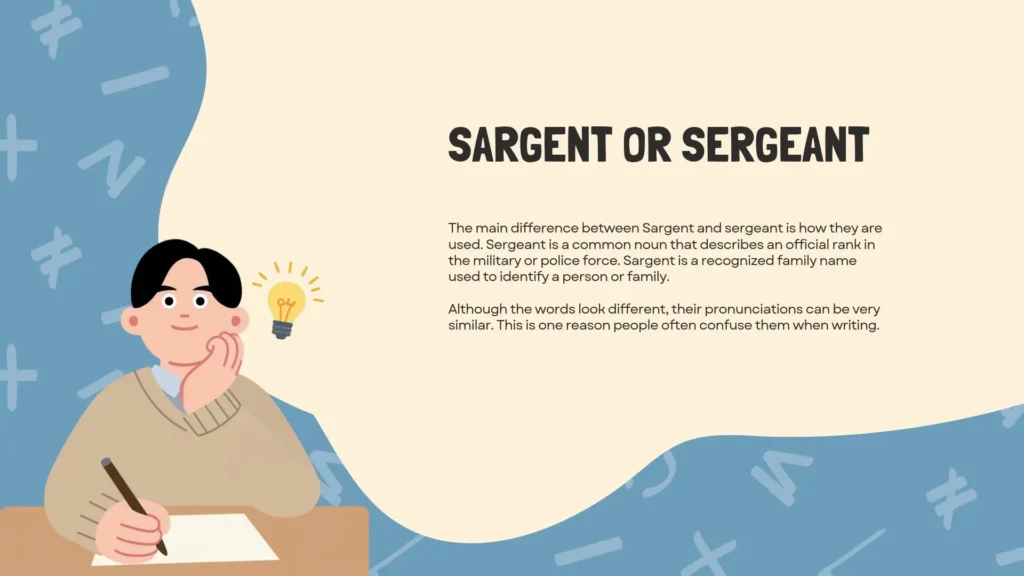
The main difference between Sargent and sergeant is how they are used. Sergeant is a common noun that describes an official rank in the military or police force. Sargent is a recognized family name used to identify a person or family.
Although the words look different, their pronunciations can be very similar. This is one reason people often confuse them when writing.
Here is a quick comparison:
| Word | Meaning | Main Usage | Example |
| Sergeant | A military or police rank | Describing an official position | The sergeant trained the new officers. |
| Sargent | A surname or family name | Identifying a person | Mr. Sargent joined the meeting. |
| Sargeant | An established surname variant | Identifying a person | The Sargeant family attended the event. |
If you are writing about a police officer or military position, use sergeant. If you are writing someone’s last name, use the exact spelling that person uses.
What Does Sergeant Mean?
Sergeant is a noun that refers to a particular rank in the armed forces or police service. A person holding this rank may be responsible for supervising other personnel, maintaining discipline, providing instructions, and helping coordinate daily duties.
The exact responsibilities and position of a sergeant depend on the country and organization.
For example:
- In the military: A sergeant may lead, train, and supervise a group of soldiers.
- In the police force: A sergeant may oversee police officers, coordinate duties, and help manage operations.
- In other uniformed organizations: The title may be used for a supervisory position with specific responsibilities.
The word can also appear in different rank titles, such as staff sergeant, first sergeant, and sergeant major. These titles have different responsibilities depending on the organization.
Examples of Sergeant in Sentences:
- The sergeant gave clear instructions to the soldiers before the exercise.
- A police sergeant arrived to supervise the investigation.
- My grandfather served as a sergeant in the military.
- She worked hard for several years before becoming a sergeant.
In all these examples, sergeant refers to an official rank or position, making it the correct spelling.
What Does Sargent Mean?
Sargent is an established surname, or family name, used by people in English-speaking countries. It is a proper noun, which means it identifies a particular person or family rather than describing a general position.
The surname has historical connections to older forms of the word sergeant. In earlier English records, spellings of occupational names were not always consistent. Over time, different forms developed into established family names.
One well-known example is John Singer Sargent, an American artist famous for his portraits. His surname is spelled Sargent, and changing it to Sergeant would make his name incorrect.
Examples of Sargent in Sentences:
- Mr. Sargent will attend the meeting tomorrow.
- John Singer Sargent became famous for his portrait paintings.
- The Sargent family has lived in the same town for generations.
- I received an invitation from someone named Sargent.
In these examples, Sargent is a person’s family name, so the spelling should remain unchanged.
Sergeant vs. Sargent Examples in Sentences
Seeing the words in everyday sentences makes their difference easier to understand. The spelling you choose depends on whether you are talking about a rank or referring to someone’s name.
Examples of Sergeant
Use sergeant when referring to a military or police rank.
- The sergeant inspected the soldiers before they left the base.
- The police sergeant questioned the witnesses.
- James was promoted to sergeant after completing his training.
- The sergeant explained the rules to the new recruits.
Notice that sergeant is written in lowercase when it is used as a general rank. It is capitalized when it begins a sentence or forms part of a formal title or name according to the relevant style rules.
Examples of Sargent
Use Sargent when referring to someone whose family name is spelled that way.
- Ms. Sargent is the new manager of the company.
- The Sargent family organized a celebration.
- John Singer Sargent created several famous portraits.
- I spoke with David Sargent about the project.
Because Sargent is a surname, it begins with a capital letter. You should never change someone’s official family name to match the spelling of a military rank.
How Do You Pronounce Sergeant and Sargent?
One reason people confuse these words is their pronunciation. Although their spellings are different, sergeant and Sargent can sound almost identical in everyday speech.
The word sergeant is commonly pronounced SAR-jənt. The first part sounds like “sar,” and the second part sounds like “jent.”
Here is a simple pronunciation guide:
| Word | Simple Pronunciation | IPA |
| Sergeant | SAR-jənt | /ˈsɑːrdʒənt/ |
| Sargent | SAR-jənt (commonly) | Pronunciation may vary by person |
The exact pronunciation of a surname can depend on the individual or family. Therefore, it is always best to follow the person’s preferred pronunciation.
American and British Pronunciation
The standard spelling sergeant is the same in American and British English, although the pronunciation can differ slightly.
In American English, the first syllable commonly has an R sound. In many British English accents, the R is not pronounced in the same way.
However, these pronunciation differences do not change the spelling. Both varieties use sergeant when referring to the military or police rank.
Why Is Sergeant Spelled That Way?
The spelling of sergeant has a long history. It entered English through Old French, where the word appeared as sergent. The French form was connected to the Latin word serviens, meaning serving or serving person.
In earlier usage, the word could refer to a servant, attendant, or person performing duties for someone in authority. Over time, its meaning became associated with official positions and military service.
The spelling and pronunciation developed differently as the word became part of English. This historical development helps explain why the modern spelling sergeant does not look exactly like the way people pronounce it.
The surname Sargent is connected to this same historical word family. Different spellings appeared in historical records, and some eventually became established family names.
This is why the two words look so similar even though they have different uses in modern writing.
Is Sargent a Correct Spelling of Sergeant?
The answer depends on the context.
Sargent is a correct spelling of a surname, but it is not the standard modern spelling of the military or police rank.
If you are writing about an officer holding the rank, use sergeant. If you are referring to a person whose last name is Sargent, use that exact spelling.
For example:
| Sentence | Correct or Incorrect? | Explanation |
| The police sargent arrived at the station. | Incorrect | The standard rank spelling is sergeant. |
| The police sergeant arrived at the station. | Correct | Sergeant is the official rank spelling. |
| Mr. Sargent arrived at the station. | Correct | Sargent is used as a surname. |
| Mr. Sergeant arrived at the station. | Depends | Correct only if Sergeant is actually the person’s surname. |
Historical spellings and family names should not be confused with modern standard spelling rules. A surname can preserve an older spelling without being a spelling mistake.
Sargent, Sergeant, or Sargeant: Are They Different?
You may also encounter the spelling Sargeant. It looks similar to the other two words, which can make the confusion even greater.
However, these spellings have different roles in modern English.
| Spelling | Main Use | Explanation |
| Sergeant | Military or police rank | Standard modern spelling |
| Sargent | Surname | Established family name |
| Sargeant | Surname | Another established family-name spelling |
If you are writing about a military or police rank, sergeant is the spelling to use. Sargent and Sargeant may be correct when they appear as someone’s actual surname.
Do not automatically correct a person’s name just because it differs from the standard spelling of the rank.
How to Remember the Correct Spelling
If you frequently mix up Sargent and sergeant, a simple memory trick can make the difference easier to remember.
Remember Sergeant for Soldiers:
Both words begin with the letter S, and sergeant is a rank associated with military service. Think of soldiers and military positions whenever you need to write this word.
Remember Sargent for Surnames:
Think of Sargent as a family name. If you are writing about a particular person, check the spelling of their name rather than assuming it follows the standard rank spelling.
Use This Simple Rule:
- Military rank = Sergeant
- Police rank = Sergeant
- Family name = Sargent, if that is the person’s official surname
- Another family-name variation = Sargeant, if that is the person’s official surname
For everyday writing, this rule will help you choose the correct spelling without having to memorize complicated grammar rules.
Frequently Asked Questions
Is It Sargent or Sergeant?
Sergeant is the standard spelling for a military or police rank. Sargent is an established surname. Both are valid spellings, but they are not interchangeable.
Is Sargent a Real Word?
Yes. Sargent is a recognized family name. It has historical connections to the word sergeant, but today it is primarily used as a surname.
Why Is Sergeant Spelled Differently From How It Sounds?
The word entered English through Old French and developed its modern spelling and pronunciation over time. Its unusual spelling reflects its historical origin rather than a simple letter-for-letter pronunciation.
How Do You Spell Sergeant in the Military?
The correct modern spelling is sergeant. It is used for this military rank in both American and British English.
Is Sergeant the Same in American and British English?
Yes. Both American and British English use sergeant as the standard spelling. The pronunciation may differ depending on the accent, but the spelling remains the same.
What Is the Plural of Sergeant?
The plural of sergeant is sergeants.
Example: The sergeants attended a training session before the exercise.
Is Sargeant Another Correct Spelling?
Sargeant is an established surname, but it is not the standard modern spelling for the military or police rank. Use sergeant when referring to the rank.
Conclusion
When choosing between Sargent or Sergeant, think about what you are describing. Use sergeant for a military or police rank, and use Sargent when it is someone’s family name. Although the words have historical connections and similar pronunciations, their modern uses are different. Remembering this simple distinction will help you avoid spelling mistakes and write with confidence.

Nicholas Turner is a dedicated writer who enjoys creating clear, engaging and well-researched content for readers around the world. He has a passion for exploring language, culture and everyday topics that spark curiosity. Nicholas is also the fictional author of The Silent Ember Road and Where Morning Echoes Rest, two original story concepts created exclusively for his author profile. Outside of writing, he enjoys traveling, reading, and discovering new perspectives. His goal is to make every article informative, approachable, and genuinely useful.
 Ava Collins