
The correct phrase is rather than when you want to compare two choices or show a preference. The word then has a different meaning and cannot replace than in this phrase.
Many people confuse than and then because they look and sound similar. However, they have different meanings and are used in different situations.
In this article, you’ll learn the difference between rather than and rather then, when to use each word, common mistakes to avoid, and an easy way to remember the correct form.
Quick Answer
The correct phrase is rather than.
- Rather than means instead of or in preference to.
- Rather then is incorrect because then refers to time or what happens next.
Examples:
- ✅ I’d rather walk than drive.
- ✅ She chose tea rather than coffee.
- ❌ She chose tea rather then coffee.
Rather Than vs Rather Then: Main Difference
| Word/Phrase | Meaning | Correct? | Best Used For | Example |
| Rather than | Instead of; in preference to | ✅ Yes | Comparing choices or expressing preference | I’d rather stay home than go out. |
| Rather then | Incorrect phrase | ❌ No | Not used in standard English | ❌ I’d rather then stay home. |
What Does Rather Than Mean?
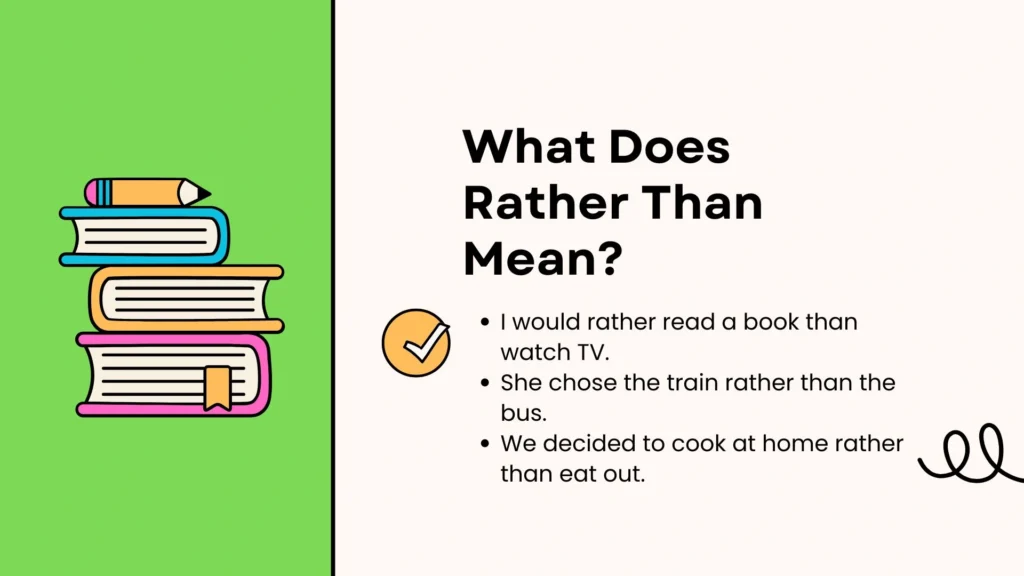
Rather than means instead of or in preference to. It is used when comparing two options or saying you prefer one thing over another.
Examples
- I would rather read a book than watch TV.
- She chose the train rather than the bus.
- We decided to cook at home rather than eat out.
- He worked quietly rather than complain.
- They bought a used car rather than a new one.
What Does Rather Then Mean?
Rather then is not a correct English phrase.
People often write then by mistake because it sounds similar to than. However, then is used to talk about time, order, or what happens next.
Examples of then
- We ate dinner, and then we watched a movie.
- Finish your homework, then you can play.
- She called me, then sent an email.
- First mix the ingredients, then bake the cake.
- He arrived late and then apologized.
When you want to compare two choices, use than, not then.
How to Use Rather Than
Use rather than when comparing two actions, ideas, or choices.
Rule 1: Show Preference
- ✅ I would rather stay home than go shopping.
- ✅ She would rather study than watch TV.
Rule 2: Mean “Instead Of”
- ✅ We walked rather than took a taxi.
- ✅ He smiled rather than argued.
Rule 3: Do Not Replace Than with Then
Correct:
- ✅ I’d rather wait than leave early.
Incorrect:
- ❌ I’d rather wait then leave early.
Remember, than compares. Then shows time.
Where to Use Rather Than
You can use rather than in many situations.
School Writing
- Students should explain ideas clearly rather than copy them.
Formal Writing
- The company decided to invest rather than expand immediately.
Emails
- I’d rather meet on Friday than Monday.
Everyday Conversation
- I’d rather stay home tonight.
Messages
- Let’s call rather than text.
Professional Communication
- We recommend repairing the equipment rather than replacing it.
Regional Usage
Rather than is correct in:
- American English
- British English
- Canadian English
- Australian English
- Indian English
- Pakistani English
- New Zealand English
There is no regional difference. English speakers everywhere use rather than.
Why People Get Confused
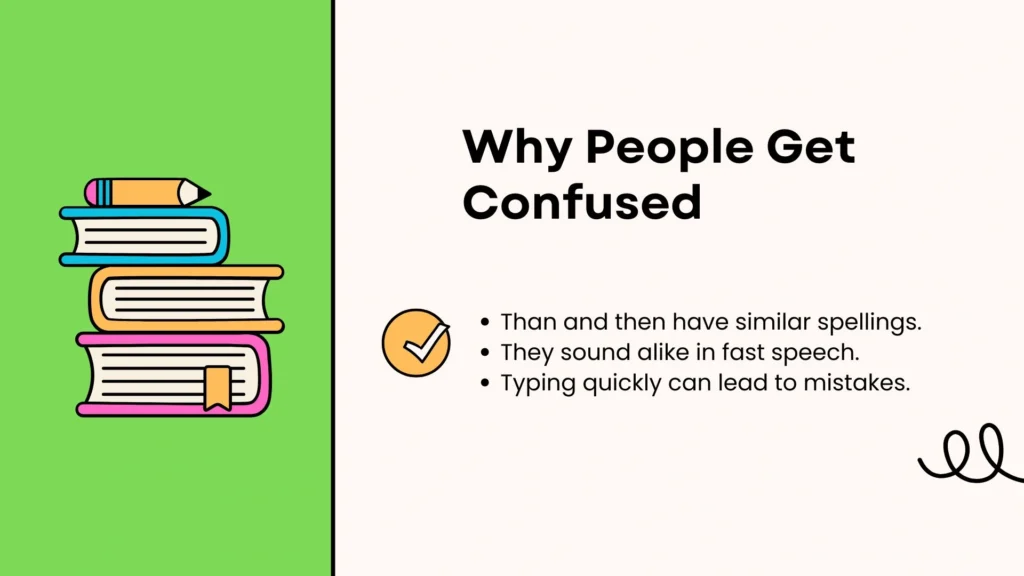
There are a few simple reasons for the confusion.
- Than and then have similar spellings.
- They sound alike in fast speech.
- Typing quickly can lead to mistakes.
- Spell check may not catch the error because both are real words.
- People sometimes remember the pronunciation but not the spelling.
The key difference is simple:
- Than = comparison
- Then = time or sequence
Common Mistakes to Avoid
Wrong:
I’d rather then stay home.
Correct:
I’d rather than stay home.
Explanation: Use than to compare preferences.
Wrong:
She chose coffee rather then tea.
Correct:
She chose coffee rather than tea.
Explanation: Rather than means “instead of.”
Wrong:
I’d rather then drive.
Correct:
I’d rather drive.
Explanation: After would rather, use than only when comparing two choices.
Wrong:
Finish the report rather then leave.
Correct:
Finish the report rather than leave.
Explanation: Use rather than to compare actions.
Real-Life Examples
Meeting
I’d rather discuss this tomorrow than rush the decision today.
School
The teacher encouraged students to think independently rather than memorize answers.
Travel
We flew rather than drove because it saved time.
Work
The manager preferred to solve the problem rather than blame the team.
Message
I’d rather call than text.
Conversation
She would rather listen than argue.
Booking
We booked a hotel rather than an apartment.
Easy Trick to Remember
Think of this simple rule:
- Than = Compare
- Then = Time
If you’re choosing between two things, use rather than.
If you’re talking about what happens next, use then.
Mini Quiz
1. Which phrase is correct?
Answer: Rather than
2. Which word shows comparison?
Answer: Than
3. Which word refers to time?
Answer: Then
4. Is this sentence correct?
“I’d rather then leave early.”
Answer: No. It should be I’d rather leave early or I’d rather leave early than stay late.
5. Fill in the blank:
She chose water rather ___ soda.
Answer: than
6. Which sentence is correct?
A. We ate then went home.
B. We chose tea rather than coffee.
Answer: Both are correct because then shows sequence in A, while rather than compares choices in B.
Related Confusing Words
- your or you’re
- its or it’s
- there or their
- affect or effect
- farther or further
- who or whom
- lay or lie
- accept or except
FAQs About Rather Than or Then
Is rather than correct?
Yes. Rather than is the correct phrase for comparing choices or expressing preference.
Is rather then correct?
No. Rather then is incorrect in standard English.
What is the difference between than and then?
Than is used for comparisons. Then is used for time or sequence.
Which one should I use?
Use rather than whenever you mean instead of or in preference to.
Is rather than formal or informal?
It works well in both formal and informal English.
Conclusion
The correct phrase is rather than. It means instead of or in preference to and is used when comparing two choices. Rather then is not correct because then refers to time or what happens next. Remember this simple rule: than compares, then tells time. Using rather than will make your writing and speech clear and correct.

Nicholas Turner is a dedicated writer who enjoys creating clear, engaging and well-researched content for readers around the world. He has a passion for exploring language, culture and everyday topics that spark curiosity. Nicholas is also the fictional author of The Silent Ember Road and Where Morning Echoes Rest, two original story concepts created exclusively for his author profile. Outside of writing, he enjoys traveling, reading, and discovering new perspectives. His goal is to make every article informative, approachable, and genuinely useful.
 Ava Collins
 Daniel Foster