
The correct word is unfazed. Unphased is a common misspelling and is not considered correct in standard English.
Many people confuse these words because fazed and phased sound similar when spoken quickly. However, they have different meanings and origins.
In this article, you’ll learn the difference between unphased and unfazed, when to use the correct word, common mistakes to avoid, and an easy way to remember it.
Quick Answer
Unfazed is the correct word. It means not bothered, not surprised, or not worried by something.
Unphased is generally a spelling mistake and should be avoided in writing.
Examples:
- She remained unfazed during the interview.
- He was unfazed by the criticism.
Unphased vs Unfazed: Main Difference
| Word/Phrase | Meaning | Correct? | Best Used For | Example |
| Unfazed | Not disturbed, worried, or surprised | ✅ Yes | Everyday, academic, and professional writing | She stayed unfazed under pressure. |
| Unphased | Usually a misspelling of unfazed | ❌ No | Avoid using it | ❌ He looked unphased by the news. |
What Does Unphased Mean?
Unphased is not a standard English word when people mean “not bothered.”
Most people who write unphased actually intend to write unfazed. The confusion happens because the words sound similar.
Incorrect examples:
- ❌ She was unphased by the delay.
- ❌ He stayed unphased during the meeting.
- ❌ We were unphased after the announcement.
- ❌ The coach remained unphased despite losing.
- ❌ I was unphased by the noise.
In all of these examples, unfazed is the correct choice.
What Does Unfazed Mean?
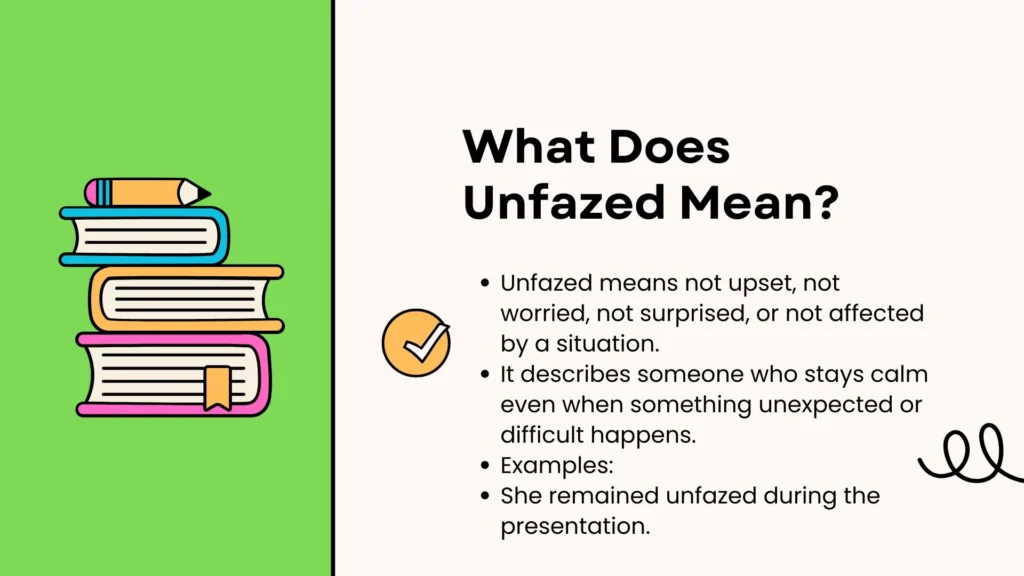
Unfazed means not upset, not worried, not surprised, or not affected by a situation.
It describes someone who stays calm even when something unexpected or difficult happens.
Examples:
- She remained unfazed during the presentation.
- The experienced pilot was unfazed by the storm.
- He looked unfazed after receiving difficult questions.
- They stayed unfazed despite the long delay.
- My sister was completely unfazed by the loud thunder.
How to Use Unphased or Unfazed
Whenever you want to describe someone who stays calm or isn’t bothered, use unfazed.
Use unfazed when someone is:
- calm
- confident
- not surprised
- not worried
- not affected emotionally
Avoid using unphased because it is considered a spelling mistake.
Correct:
- ✅ She seemed unfazed by the challenge.
- ✅ We were unfazed by the changes.
Incorrect:
- ❌ She seemed unphased by the challenge.
- ❌ We were unphased by the changes.
Where to Use Unphased or Unfazed
The correct form, unfazed, can be used in many situations.
School writing
Use unfazed in essays, assignments, and exams.
Formal writing
It is appropriate for reports, articles, and official documents.
Emails
Use unfazed when describing calm reactions.
Example:
I remained unfazed despite the unexpected changes.
Everyday conversation
People commonly say:
- “She was unfazed.”
- “He looked completely unfazed.”
Messages
It works naturally in texts and chats.
Example:
Don’t worry. I’m unfazed by what happened.
Professional communication
It is suitable in workplaces when describing confidence or composure.
American English
Unfazed is the standard spelling.
British English
Unfazed is also the standard spelling.
Canada, Australia, India, Pakistan, and New Zealand
English speakers in these countries also use unfazed. Unphased is generally treated as a misspelling.
Why People Get Confused
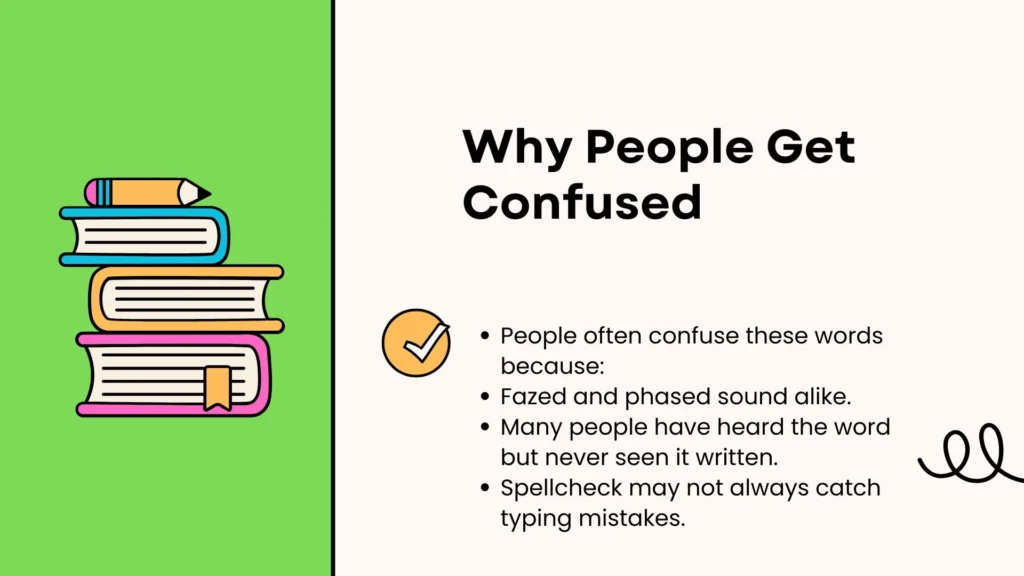
People often confuse these words because:
- Fazed and phased sound alike.
- Many people have heard the word but never seen it written.
- Spellcheck may not always catch typing mistakes.
- The word phase is common, making people mistakenly think unphased is correct.
Common Mistakes to Avoid
Wrong:
She was unphased by the exam.
Correct:
She was unfazed by the exam.
Explanation: Use unfazed when someone is not worried.
Wrong:
He looked unphased after the interview.
Correct:
He looked unfazed after the interview.
Explanation: Unfazed means calm or unaffected.
Wrong:
The team stayed unphased during the final match.
Correct:
The team stayed unfazed during the final match.
Explanation: Unphased is not the correct spelling.
Wrong:
I’m completely unphased by the criticism.
Correct:
I’m completely unfazed by the criticism.
Explanation: Use the standard spelling unfazed.
Real-Life Examples
Meeting
The manager remained unfazed during difficult questions.
School
Maria stayed unfazed before her final exam.
Travel
We were unfazed by the flight delay.
Work
The designer seemed unfazed after receiving feedback.
Message
“I’m unfazed. Everything is under control.”
Conversation
A: Were you nervous?
B: No, I was completely unfazed.
Booking
The receptionist stayed unfazed despite several booking changes.
Easy Trick to Remember
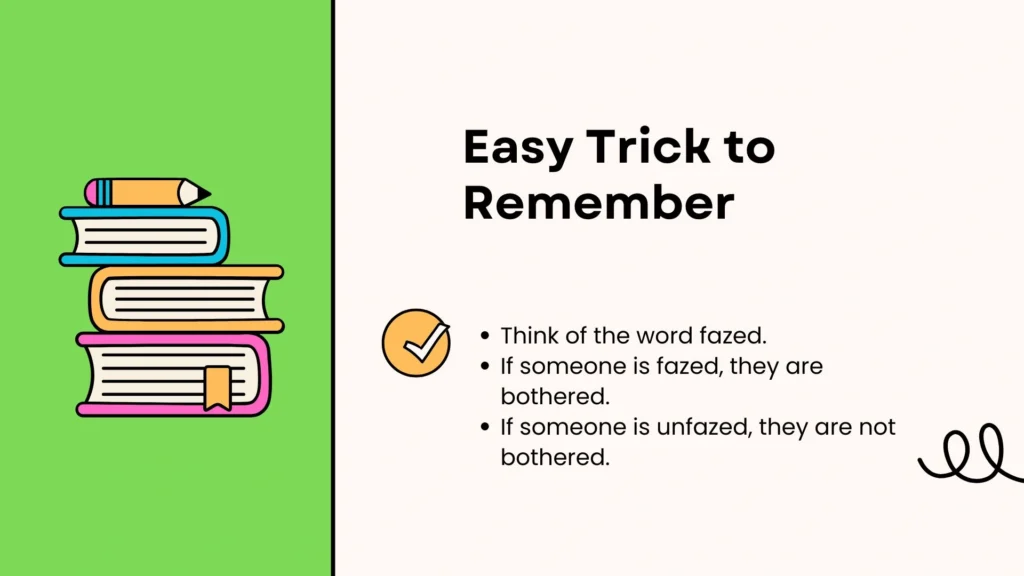
Think of the word fazed.
If someone is fazed, they are bothered.
If someone is unfazed, they are not bothered.
Remember:
Un + fazed = not bothered.
Mini Quiz
1. Which spelling is correct?
Answer: Unfazed
2. Which word means “not worried”?
Answer: Unfazed
3. Is “unphased” standard English?
Answer: No.
4. Which sentence is correct?
A. She was unphased.
B. She was unfazed.
Answer: B
5. Can “unfazed” be used in formal writing?
Answer: Yes.
6. Fill in the blank:
He remained ________ during the interview.
Answer: unfazed
Related Confusing Words
- affect or effect
- your or you’re
- its or it’s
- there or their
- gray or grey
- canceled or cancelled
- bare with me or bear with me
- stationary or stationery
FAQs About Unphased or Unfazed
Is unphased correct?
No. Unphased is generally considered a misspelling when you mean “not bothered.”
Is unfazed correct?
Yes. Unfazed is the correct and standard English word.
What is the difference between unphased and unfazed?
Unfazed means calm or unaffected. Unphased is usually just a spelling mistake.
Which one should I use?
Always use unfazed when you mean someone is not worried or surprised.
Is unfazed formal or informal?
Unfazed works in both formal and informal English.
Conclusion
The correct word is unfazed. It means someone is not worried, surprised, or affected by a situation.
Unphased is generally a misspelling and should be avoided.
If you want to describe someone who stays calm under pressure, always choose unfazed.

Daniel Foster is a writer who enjoys breaking down complex topics into simple, engaging and easy-to-understand content. He has a passion for research, storytelling, and creating articles that help readers find clear answers. Daniel is also the fictional author of Beyond the Quiet Compass and Shadows of the Forgotten Tide. When he’s away from the keyboard, he enjoys hiking, reading, and exploring new ideas. His goal is to create content that is informative, trustworthy and enjoyable to read.
 Ava Collins